
TEETH REPLACEMENT OPTIONS – HOW TO CHOOSE?
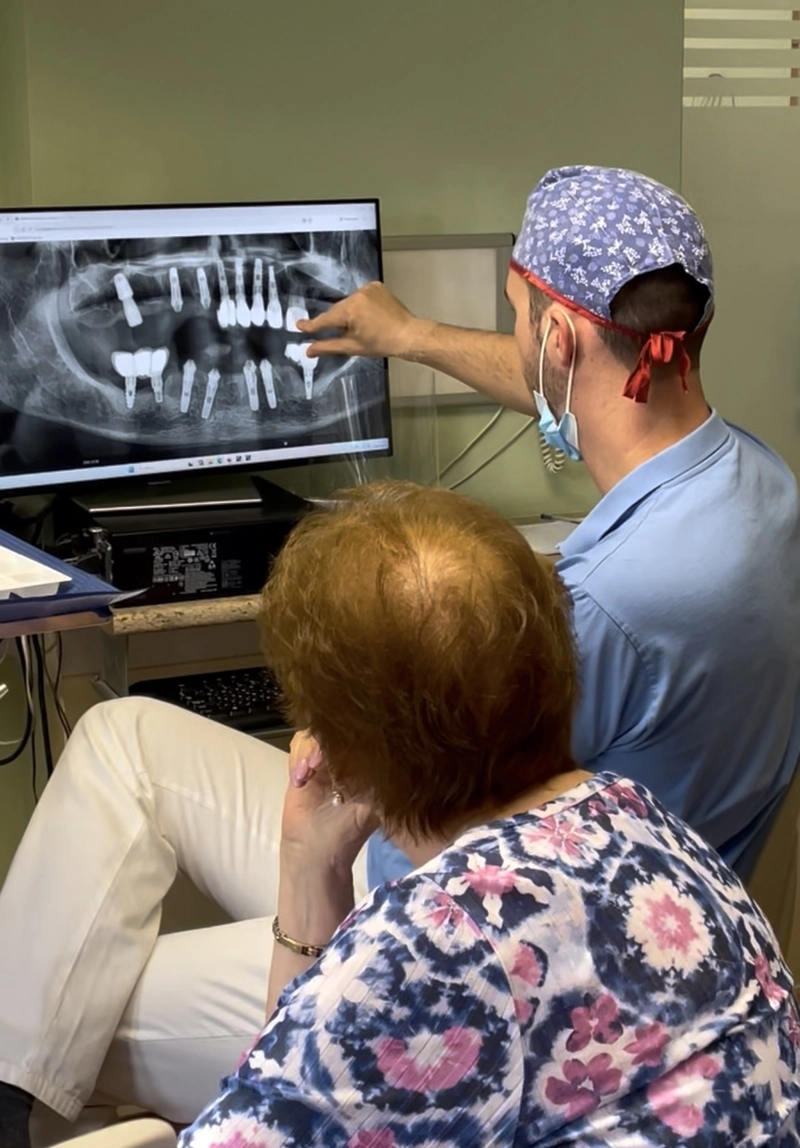
Missing teeth are not merely an aesthetic issue. The loss of one or more teeth can affect chewing, speech, and the long-term health of the dentition and jawbone.
In modern dentistry, there are several well-established solutions available for replacing missing teeth—the question is which one is most appropriate for a given situation. The choice is always made based on individual considerations, taking into account the patient’s specific circumstances, needs, and long-term stability.
WHY IS TOOTH REPLACEMENT IMPORTANT?
The consequences of missing teeth often develop insidiously—adjacent teeth shift, chewing efficiency declines, certain teeth become overloaded, bone loss may begin, and aesthetic changes may occur.
Tooth replacement is not a “luxury,” but a long-term investment in your health!
The goal of tooth replacement is not only aesthetic restoration, but also the restoration of chewing function, the preservation of dental arch stability, and ensuring proper loading of the jawbone.
THE MOST COMMON DENTAL RESTORATION SOLUTIONS
1. Dental Implant – The most stable, state-of-the-art solution
An implant is an artificial tooth root made of titanium that is surgically placed into the jawbone, providing a stable foundation for the crown that is placed on top of it. In the long term, it is one of the most advanced and natural-looking solutions, as it does not place any strain on adjacent teeth.
Advantages:
- no need to grind down adjacent teeth
- stable, long-term results
- natural feel and aesthetics
- helps preserve bone mass
When is it ideal?
- if one or more teeth are missing
- if you’re looking for a durable, premium solution
- if you have sufficient bone mass
2. Bridge – A faster, but compromise solution
A bridge replaces a missing tooth by anchoring itself to the adjacent teeth. In suitable cases, it can provide a quick and aesthetic solution, especially if the adjacent teeth already require restoration.
Advantages:
- quick solution
- no surgical intervention
Disadvantages:
- the adjacent teeth must be ground down
- does not place a load on the bone, which leads to bone loss in the long term
Who is it recommended for?
- if implantation is not feasible for some reason
- if the adjacent teeth already require treatment
3. All-on-4 (full arch replacement with implants)
A modern solution used in cases of complete or extensive tooth loss, in which a fixed prosthesis for an entire dental arch is constructed on a few implants. It offers a stable, fixed alternative to removable prostheses and, when appropriate, can quickly restore chewing function and aesthetics.
In certain cases, it can even be supplemented with an immediate temporary restoration.
4. Removable Dentures – For more extensive tooth loss
These can be used when multiple teeth are missing, whether partially or completely. Modern removable dentures are now more comfortable and aesthetically pleasing, although in certain cases fixed solutions may be preferable.
Advantages:
- more cost-effective
- can be used even in cases of extensive tooth loss
Disadvantages:
- less stable
- takes some getting used to
- compromise in terms of comfort
HOW DO WE CHOOSE THE RIGHT SOLUTION?
There is no single universal answer—the decision is always based on a thorough examination and planning. In doing so, we take into account:
- the extent of tooth loss,
- the quantity and quality of bone tissue,
- the condition of the remaining teeth,
- overall health,
- chewing function and aesthetic considerations,
- as well as the patient’s individual needs.
The first and most important step is a personal consultation, during which you and the specialist will decide together on the best solution. The goal is always to find a solution that is stable in the long term, functionally appropriate, and looks natural.
WHAT SHOULD YOU KNOW ABOUT THE PROCESS?
Dental restoration is not a single-step process but the result of a well-thought-out treatment plan. Following the planning phase, the procedures are carried out in a sequential manner, depending on the chosen solution. State-of-the-art diagnostic tools and digital planning ensure that the process is predictable and precisely planned.
What many people don’t realize is that the longer they put off addressing the problem, the more complex the restoration can become. Early intervention often offers a simpler, faster, and more beneficial long-term solution.
Dental restoration always requires a personalized solution. If you’d like to find out which option is best for you, the specialists at OralMed Studio are happy to assist you during a personal consultation.

